
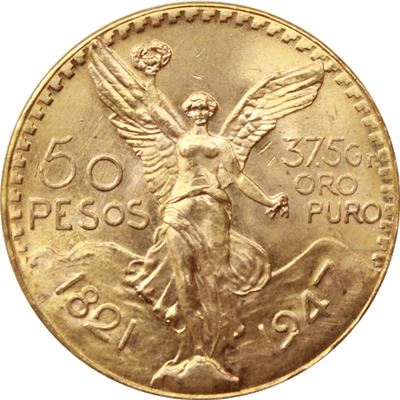
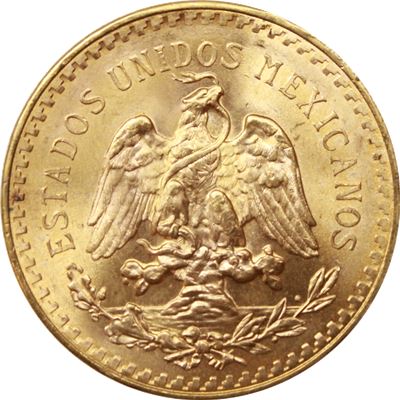
Gold Mexican 50 Pesos Centenarios (1.2057 oz Gold)


| Qty | Check / Bank Wire | Credit Card |
|---|---|---|
| 1+ | $5,356.97 | $5,544.46 |

Product Highlight:
- Mexico's Most Famous Gold Coin
- One Of The Largest Circulating Gold Coins
- .900 Fine Gold - Same As pre-1933 US Coins
- Larger And Heavier Than A US Double Eagle


Buy Gold Mexican 50 Pesos Centenarios (1.2057 oz Gold)
The gold Mexican Centenario has long been a favorite of investors in the know. Gainesville Coins offers this beautiful and massive vintage bullion coin at market-leading low premiums!
Stock photo only. Random year and condition
Product Details
- Mexico's most famous gold bullion coin
- Valued for its design and low premiums over spot
- Celebrates centennial of Mexican Independence
- "Angel of Independence" featured on obverse
- .900 fine (same as pre-1933 US gold)
- More than 1.2 troy ounces of gold per coin (37.5 gr)
- Struck in the Casa de Moneda de Mexico (Mexican Mint)
- First issued in 1921
- Restrikes in 1949–1972 and 2000–2009
- All restrikes feature 1947 date
Buy Gold and Silver Bullion Coins Online Fast, Easy, and Securely With Gainesville Coins
Gainesville Coins is your trusted source for purchasing precious metals at the lowest prices. Orders can be placed online 24/7 or by calling us Monday - Friday at (813) 482-9300 from 9am until 6pm EST.
We accept many different forms of payment including Visa, MasterCard, Discover, American Express, personal & business checks, money orders, cashier's checks, and bank wires.
All of our shipments are sent discreetly with fully insured shipping until the time of delivery.
Gainesville Coins customers enjoy no minimum orders, no cold calls and no commission sales people.
There is no need to worry about the price of gold and silver moving as your prices are locked in at the time of your order.
With over $10 billion dollars in trusted transactions since 2006, Gainesville Coins is one of the most trusted gold and silver bullion dealers worldwide.
Specification
Related Products
)
Customer Ratings & Review
Review This Product
Share your thoughts with other customers.