
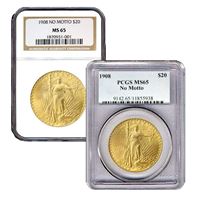
$20 Saint Gaudens Gold Double Eagle (About Uncirculated) Varied Year

| Qty | Check / Bank Wire | Credit Card |
|---|---|---|
| 1+ | $4,262.26 | $4,411.44 |



Buy $20 Saint Gaudens Gold Double Eagle (About Uncirculated) Varied Year
There is probably no more famous and more beloved American coin than the Saint-Gaudens $20 gold double eagle. These incredible pieces of history offer a window into early-20th-century America.
The product of President Teddy Roosevelt's move to beautify US Coins and sculptor Augustus Saint-Gaudens' genius touch, the $20 St. Gaudens Gold Double Eagle is regarded as one of the US Mint's most stunning coins. Struck from .900 pure gold between 1907 and 1933, each Saint Gaudens Double Eagle has 0.9675 troy oz of pure gold content.
As legal tender, these coins carried a face value of 20 dollars. It is still the highest face value of any circulating coin in United States history. Of course, the melt value of a double eagle coin's gold content far exceeds this denomination, so you would never spend them as cash today!
Aside from the concept of an actual gold coin being foreign to most people born after 1933, the $20 denomination for a single coin also bears some novelty. Above all, the design's portrayal of Liberty is seen by numismatic experts as an extremely important innovation that charted a new artistic path for all future US coins.
Historic Numismatic Design
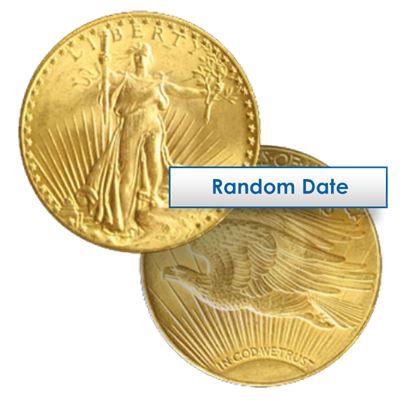
The obverse features St. Gaudens's majestic striding Lady Liberty confidently holding a torch of enlightenment and olive branch of peace. Behind her the coin's field shows the rays of a dawning sun emerging over the United States Capitol building. 46 stars representing the 46 states (at the time in 1907; 48 stars after 1912) encircle the coin while “LIBERTY” and the date of minting are written at the top and bottom of the design, respectively.
The reverse shows a mighty eagle flying across the sun's rays with “UNITED STATES OF AMERICA" and "TWENTY DOLLARS” found at the top rim. “E PLURIBUS UNUM” is inscribed around the edge of the coin with a lettered design. All St. Gaudens Gold Double Eagles struck post-1908 also have the motto “IN GOD WE TRUST” on the reverse, curling just above the sun.
Gold and Silver Coins For Sale Online
Today's growing ecommerce environment makes buying gold and silver online easier and safer than it's ever been. GC has been a digital leader in the bullion industry for over a decade in addition to operating a traditional brick-and-mortar coin and bullion business in Lutz, FL.
You can visit our luxury showroom, place an order anytime online, or speak to one of traders over the phone at (813) 482-9300, Monday through Friday from 9 am to 6 pm EST.
Gainesville Coins is offering these beautiful St. Gaudens Double Eagle coins in About Uncirculated (AU) condition and in random dates according to availability. These AU coins exhibit very little discernible wear to their relief devices and often retain a great deal of mint luster.
Take advantage of this opportunity to add an About Uncirculated gold coin with a beautiful design, historic pedigree, and 0.9675 troy oucne of pure gold to your collection today!
Specification
Related Products
 Varied Year)
Customer Ratings & Review
Review This Product
Share your thoughts with other customers.