COMEX-Approved Refiner
.9999 Fine Gold — 24 Karat
IRA Eligible
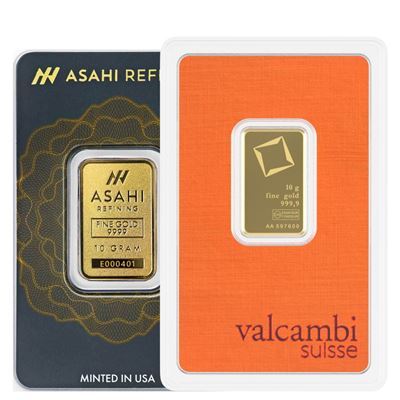
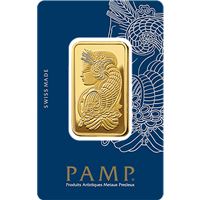
The 10 Gram COMEX Approved Gold Bar is a .9999 fine (24-karat) gold bullion bar produced by a COMEX-approved refiner such as PAMP Suisse, Valcambi, Credit Suisse, Perth Mint, or Argor-Heraeus. Each bar contains exactly 10 grams (0.3215 troy ounces) of pure gold — roughly one-third of a troy ounce — arrives sealed in its original assay card certifying weight and purity, and is eligible for inclusion in a Precious Metals IRA. The random design format offers investors the lowest available premium on 10 gram gold from world-class refineries.
About the 10 Gram COMEX Approved Gold Bar
The 10 Gram COMEX Approved Gold Bar is the largest and most premium-efficient fractional gold bar commonly available to retail investors. Containing just under one-third of a troy ounce of .9999 fine gold, the 10 gram bar occupies a strategic position in the bullion market: it delivers substantially lower per-gram premiums than smaller fractional bars (1g, 2.5g, 5g) while requiring significantly less capital than a full 1 oz bar. For investors who want meaningful gold exposure with near-institutional premium efficiency, the 10 gram bar is the optimal fractional choice.
Every bar in this listing is produced by a refiner that holds official accreditation from the Commodity Exchange (COMEX), a division of the CME Group. COMEX approval represents one of the most rigorous quality certifications in precious metals, requiring refiners to meet exacting standards for purity, weight accuracy, independent assay verification, and product marking. This ensures that every 10 gram bar you receive — regardless of refiner — meets institutional-grade quality standards.
Because this is a "random design" listing, the specific brand and design will vary based on available inventory. Possible refiners include PAMP Suisse, Valcambi Suisse, Credit Suisse, Perth Mint, Argor-Heraeus, Heraeus, Istanbul Gold Refinery (IGR), Metalor, and others. The random design format allows Gainesville Coins to source from whichever COMEX-approved refiner offers the best pricing at the time of your order, delivering the lowest possible premium to you.
10 Gram Gold Bar Specifications
Each 10 Gram COMEX Approved Gold Bar meets the following specifications, regardless of which refiner produced it:
| Specification |
Detail |
| Metal Content | 10 Grams of .9999 Fine Gold (0.3215 Troy Ounces) |
| Purity | 99.99% (24 Karat) |
| Refiner | Random — COMEX-Approved (e.g., PAMP Suisse, Valcambi, Perth Mint, Credit Suisse, Argor-Heraeus, Heraeus, IGR, Metalor) |
| Design | Random — varies by refiner and availability |
| Condition | New / Brilliant Uncirculated |
| Packaging | Sealed in original assay card with serial number |
| Dimensions | Approximately 31 mm × 18 mm × 1.0 mm (varies by refiner) |
| Markings | Refiner hallmark, weight (10 g), purity (.9999), serial number |
| Assay Certificate | Yes — included with matching serial number |
| IRA Eligible | Yes — meets IRS .995 minimum fineness requirement |
| Face Value | None — gold bars are not legal tender |
What Does "COMEX Approved" Mean?
COMEX — the Commodity Exchange — is a division of the Chicago Mercantile Exchange (CME Group) and operates as one of the world's most important precious metals trading platforms. It is the primary exchange for gold and silver futures contracts in the United States, and its benchmark pricing influences gold markets worldwide. COMEX also sets strict quality standards for the physical gold delivered against its futures contracts.
To earn COMEX approval, a refiner must demonstrate that its gold products consistently meet rigorous standards for purity, weight accuracy, and product marking — including the refiner's hallmark, fineness, serial number, and (since January 2025) the month and year of production. The refiner must also pass independent assay verification by a COMEX-approved assayer and maintain compliance through ongoing audits.
For retail products like this 10 gram bar, "COMEX Approved" means the refiner holds active COMEX accreditation. The gold was produced under the same quality control framework that governs exchange-traded institutional bullion. This gives investors, dealers, and IRA custodians confidence in the bar's authenticity, purity, and provenance — and it ensures the bar is universally accepted for resale or IRA deposit anywhere in the world.
Why Buy a 10 Gram Gold Bar?
The 10 gram gold bar is the largest standard fractional bar size and, for many investors, the most compelling value in the gold bar market below one troy ounce. Here is what makes 10 grams an exceptional choice:
Closest Premium to 1 Ounce Without the Full Commitment. Premium efficiency in gold bars improves as size increases, because the fixed costs of refining, minting, assay certification, and sealed packaging are spread over more gold. At 10 grams (0.3215 troy ounces), the per-gram premium drops significantly compared to smaller fractional bars — approaching the cost-efficiency of a full 1 oz bar. For investors who want the lowest possible premium on fractional gold, the 10 gram bar is consistently the best option.
One-Third of a Troy Ounce. At 0.3215 troy ounces, a 10 gram bar contains meaningful gold value — roughly one-third of what a 1 oz bar holds. This makes it large enough to track gold price movements in a tangible way. A $100 move in the gold spot price translates to approximately a $32 change in the value of a single 10 gram bar. For investors who want fractional gold that still "moves with the market," 10 grams provides that connection without the cost of a full ounce.
The Standard Fractional Size in International Markets. Ten grams is one of the most widely recognized gold bar weights globally. It is a standard product from every major international refiner — PAMP Suisse, Valcambi, Perth Mint, Heraeus, Argor-Heraeus — and is commonly traded across Europe, Asia, the Middle East, and the Americas. This global standardization translates into strong liquidity: a 10 gram COMEX-approved bar can be sold to virtually any precious metals dealer worldwide at a competitive price.
Strategic Portfolio Building. For investors who are not ready to purchase full-ounce bars but want to build a serious gold position over time, 10 gram bars offer an ideal accumulation unit. Purchasing one 10 gram bar per month means accumulating just over 1 troy ounce of gold every three months — a pace that builds a meaningful gold allocation within a year while keeping each individual purchase manageable.
Flexible Liquidation. Holding gold across multiple 10 gram bars gives investors the ability to sell in fractions without breaking larger bars. If you need to raise a specific dollar amount, selling a single 10 gram bar liquidates roughly one-third of an ounce — far more precise than selling a full 1 oz bar and being left with excess cash or too little gold. This makes the 10 gram size particularly practical for planned withdrawals, estate distributions, or tactical rebalancing.
High-Value Gifts and Milestones. A 10 gram gold bar in its sealed assay card represents a substantial and memorable gift. With roughly one-third of an ounce of pure gold, it conveys genuine value and permanence — ideal for major life events such as weddings, milestone birthdays, retirements, or the birth of a child.
How Does a 10 Gram Gold Bar Compare to Other Sizes?
Gold bars are available across a wide range of weights. Here is how the 10 gram bar compares in terms of gold content, premium structure, and practical use:
| Bar Size |
Gold Content |
Typical Premium |
Best For |
| 1 Gram |
0.03215 ozt |
Highest per gram |
Entry-level, small gifts |
| 2.5 Gram |
0.08038 ozt |
High |
Incremental stacking |
| 5 Gram |
0.16075 ozt |
Moderate |
Balanced value, regular buying |
| 10 Gram |
0.3215 ozt |
Moderate-low |
Best fractional premium, serious allocation |
| 1 Troy Ounce |
1.0 ozt (31.103 g) |
Low |
Most popular investment size |
| 10 Troy Ounces |
10.0 ozt (311.03 g) |
Lowest per gram |
High-volume, institutional |
The 10 gram bar delivers the lowest per-gram premium of any fractional gold bar size. It typically costs only a modest percentage more per gram than a full 1 oz bar, while requiring roughly one-third of the capital outlay. For investors optimizing cost-per-gram within the fractional gold market, the 10 gram bar is the most efficient choice available.
Is a 10 Gram Gold Bar IRA Eligible?
Yes. A 10 gram gold bar that meets the IRS minimum fineness requirement of .995 and is produced by a COMEX, NYMEX, LBMA, or ISO 9000 accredited refiner is eligible for inclusion in a self-directed Precious Metals IRA. At .9999 fine, every bar in this listing significantly exceeds that threshold.
The 10 gram bar is arguably the most practical fractional size for IRA investors. It offers near-ounce-level premium efficiency, which keeps acquisition costs low inside the tax-advantaged account. And when it comes time to take required minimum distributions (RMDs), holding gold in 10 gram bars allows for more precise liquidation — your custodian can sell a single 10 gram bar (roughly one-third of an ounce) rather than a full 1 oz bar, giving you better control over the dollar amount distributed. A self-directed IRA custodian and IRS-approved depository are required. Contact Gainesville Coins for assistance with IRA-directed purchases.
What Is an Assay Certificate?
Every 10 Gram COMEX Approved Gold Bar in this listing arrives sealed in its original assay card. An assay certificate is an official document issued by the refiner or an independent assayer that certifies the bar's weight, purity, and serial number. The certificate includes the refiner's name and hallmark, the exact weight of the bar (10 grams), the fineness of the gold (.9999), and a unique serial number that matches the number stamped directly on the bar.
The assay card functions as tamper-evident packaging — the bar is sealed within the card at the refinery, and any attempt to open or alter the card is immediately visible. This provides buyers, dealers, and IRA custodians with confidence in the bar's authenticity without the need for destructive testing. For maximum resale value and easiest liquidation, always keep gold bars sealed in their original assay packaging.
What Does "Random Design" Mean?
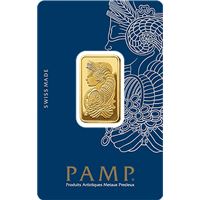
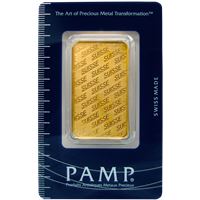
A "random design" listing means Gainesville Coins will fulfill your order with a 10 gram gold bar from whichever COMEX-approved refiner offers the best available pricing at the time your order is processed. You may receive a bar from PAMP Suisse (Lady Fortuna, Suisse, or Rosa designs), Valcambi, Credit Suisse, Perth Mint, Argor-Heraeus, Heraeus, Istanbul Gold Refinery, Metalor, or another accredited refiner.
This format delivers two key advantages. First, it produces the lowest possible premium because Gainesville Coins is not restricted to a single refiner's pricing. Second, every bar — regardless of which brand you receive — meets identical investment standards: .9999 purity, exactly 10 grams of gold, sealed assay certification, and COMEX-accredited provenance. The gold content, quality, and IRA eligibility are the same across all refiners. For investors who prioritize accumulating gold at the best price over collecting a specific brand, the random design format is the most cost-effective approach available.
10 Gram Gold Bar vs. 1 oz Gold Bar: Which Should You Buy?
The comparison between 10 gram and 1 troy ounce gold bars is one of the most common decisions facing gold investors. Both are excellent investment-grade products, and the right choice depends on your budget, purchasing frequency, and liquidity needs.
A 1 oz gold bar contains 31.103 grams of gold — approximately 3.1 times the gold in a 10 gram bar — and typically carries the lowest per-gram premium of any standard bar size. If you have the capital to purchase full-ounce bars and plan to hold them long-term, the 1 oz bar maximizes your gold-per-dollar ratio.
A 10 gram bar, however, offers advantages that a 1 oz bar cannot. Its lower per-unit cost makes it accessible for more frequent purchases, which is ideal for dollar-cost averaging strategies. It provides natural divisibility — you can liquidate one-third of an ounce at a time rather than the full ounce. And its smaller size means you can build a gold position incrementally without saving up for a larger single purchase. Many experienced investors hold both sizes: 1 oz bars for core, long-term holdings and 10 gram bars for flexibility, partial liquidation, and ongoing accumulation.
Why Buy Gold Bars from Gainesville Coins?
Lowest Premiums. By sourcing from whichever COMEX-approved refiner offers the best pricing at the time of your order, we deliver the lowest possible premium on 10 gram gold bars. Compare our prices with any competitor.
Authenticity Guaranteed. Every bar we sell comes sealed in its original assay card from a COMEX-approved refinery. The weight, purity, and serial number are certified by the refiner and verified by an independent assayer.
Fast, Insured Shipping. All orders ship in discreet, fully insured packaging.
$10 Billion+ in Trusted Transactions. Gainesville Coins has been a trusted precious metals dealer since 2006, with over $10 billion in completed transactions.
Packaging and Delivery
Each 10 Gram COMEX Approved Gold Bar is shipped sealed in its original assay card from the refiner. The assay card certifies the bar's weight, purity, and serial number. All shipments are fully insured and sent in discreet packaging with no indication of the contents. For maximum resale value, keep the bar sealed in its original assay packaging.
Frequently Asked Questions
What is a COMEX-approved gold bar?
A COMEX-approved gold bar is a bar produced by a refiner that holds official accreditation from the Commodity Exchange (COMEX), a division of the CME Group. COMEX approval requires the refiner to meet strict standards for gold purity, weight accuracy, assay certification, and product marking. Bars from COMEX-approved refiners are universally recognized and accepted by dealers, depositories, and IRA custodians worldwide.
How much gold is in a 10 gram gold bar?
Each bar contains exactly 10 grams of .9999 fine gold, which is equivalent to 0.3215 troy ounces — roughly one-third of a troy ounce. At .9999 fineness, the bar is 99.99% pure gold with virtually no alloy metals. A $100 change in the gold spot price corresponds to approximately a $32 change in the value of a single 10 gram bar.
What brand or design will I receive?
This is a random design listing, meaning the specific brand and design will vary based on available inventory at the time your order is fulfilled. Possible refiners include PAMP Suisse, Valcambi Suisse, Credit Suisse, Perth Mint, Argor-Heraeus, Heraeus, Istanbul Gold Refinery (IGR), Metalor, and others. All bars are from COMEX-approved refiners and meet identical purity and weight standards.
Is a 10 gram gold bar IRA eligible?
Yes. A 10 gram gold bar is eligible for inclusion in a self-directed Precious Metals IRA provided it meets the IRS minimum fineness of .995 and is produced by a COMEX, NYMEX, LBMA, or ISO 9000 accredited refiner. All bars in this listing are .9999 fine and from COMEX-approved refiners, exceeding IRA requirements. The 10 gram size is particularly practical for IRA investors planning for required minimum distributions, as it allows more granular liquidation than full-ounce bars.
Does the bar come with an assay certificate?
Yes. Every 10 gram gold bar in this listing arrives sealed in its original assay card from the refiner. The assay certificate verifies the bar's weight (10 grams), purity (.9999 fine gold), and unique serial number. The sealed assay packaging is tamper-evident and should be kept intact for maximum resale value.
How does a 10 gram bar compare to a 1 oz gold bar?
A 1 oz gold bar contains 31.103 grams of gold — approximately 3.1 times the gold in a 10 gram bar — and typically carries a slightly lower per-gram premium. However, a 10 gram bar requires roughly one-third of the capital outlay, making it more accessible for regular purchases. It also provides natural divisibility for partial liquidation. Many investors hold both sizes: 1 oz bars for core holdings and 10 gram bars for flexibility and ongoing accumulation.
How many 10 gram gold bars equal one troy ounce?
One troy ounce of gold equals 31.103 grams. Therefore, it takes approximately 3.11 bars of 10 grams each to equal one full troy ounce of gold. Purchasing one 10 gram bar per month means accumulating just over one troy ounce every three months.
Why is the 10 gram bar the best value in fractional gold?
The 10 gram bar delivers the lowest per-gram premium of any fractional gold bar size because the fixed costs of refining, assay certification, and sealed packaging are spread over the most gold possible within the fractional range. Its premium per gram is only modestly higher than a full 1 oz bar, while smaller fractional sizes (1g, 2.5g, 5g) carry progressively higher per-gram premiums. For investors who want fractional gold at the most efficient price point, 10 grams is consistently the optimal choice.
How should I store 10 gram gold bars?
Keep 10 gram gold bars sealed in their original assay cards. Store them in a cool, dry location away from direct sunlight. A home safe, bank safe deposit box, or professional precious metals depository are all appropriate storage options. For IRA-held gold, storage at an IRS-approved depository is required by law. Avoid removing bars from their sealed packaging to preserve authenticity and maximum resale value.





)